







The transition from the fluid freedom of the weekend to the rigid structure of the workweek often triggers a specific type of physiological unrest. Known colloquially as the “Sunday Scaries,” this anticipatory stress is more than just a passing mood; it is a measurable spike in cortisol levels that can disrupt sleep and ruin your final hours of rest. In 2026, as the boundaries between our professional and personal lives become increasingly porous, mastering the art of the “mental reset” is no longer a luxury—it is a survival skill for the modern high-achiever.
The root of weekend anxiety often lies in the weight of unfinished tasks or the dread of an upcoming heavy cognitive load. For many professionals and students, the pressure to perform at an elite level creates a persistent background noise of worry that prevents true relaxation. If you find yourself overwhelmed by complex academic or professional milestones, seeking specialized Dissertation Help from experts like myassignmenthelp can be a transformative lifestyle hack to offload that mental burden. By delegating high-stakes research and structural editing to external specialists, you effectively clear the “mental clutter” that fuels Sunday night insomnia, allowing you to enter the new week with a sense of proactive control rather than reactive fear.
Understanding the “Anticipatory Anxiety” Cycle
Before diving into the hacks, it is essential to understand why our brains behave this way. Humans are wired to seek patterns and predictability. When the “unstructured” time of a Saturday leads into the “structured” demand of a Monday, the brain perceives this shift as a potential threat.
| Biological Factor | Impact on Sunday Night | Mitigation Strategy |
| Cortisol Spike | Early morning “jitters” and racing thoughts. | Sunlight exposure and hydration. |
| Melatonin Delay | Difficulty falling asleep due to blue light/worry. | 2-hour digital detox before bed. |
| Decision Fatigue | Overwhelmed by the “To-Do” list for Monday. | Sunday evening micro-planning. |
| Cognitive Load | Unfinished complex projects causing “loops.” | Selective delegation of technical tasks. |
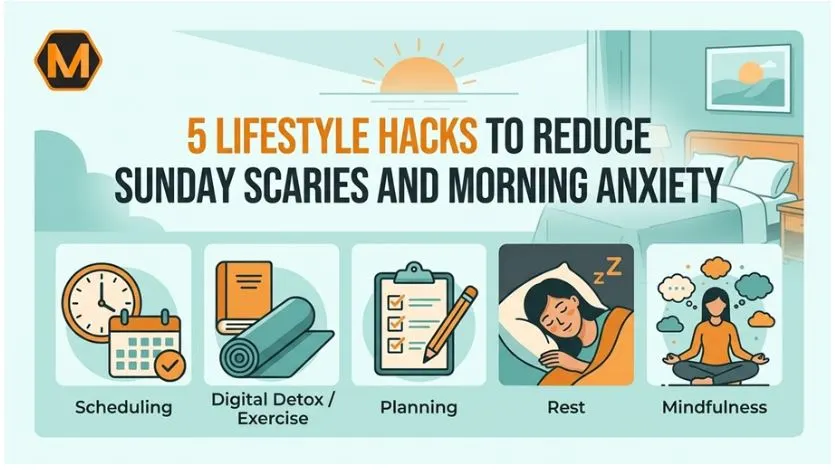
1. Implement a “Low-Dopamine” Sunday Morning
Our modern habit of reaching for a smartphone the moment we wake up is a primary driver of morning anxiety. By flooding your brain with notifications, news, and social comparisons before you’ve even brushed your teeth, you are forcing your nervous system into a state of “high alert.”
To combat this, try a low-dopamine morning. Spend the first two hours of your Sunday without a screen. Focus on tactile, grounding activities: making a slow breakfast, reading a physical book, or taking a walk without a podcast. This allows your baseline dopamine levels to stabilize, making the transition to Monday’s high-stimulation environment much less jarring.
2. The Power of “Brain Dumping” and Strategic Planning
Most morning anxiety is caused by the “Zeigarnik Effect”—a psychological phenomenon where our brains obsess over uncompleted tasks more than finished ones. When you don’t have a clear roadmap for the week, your brain loops through your to-do list all night long.
Every Sunday afternoon, sit down for twenty minutes of “Brain Dumping.” Write down every single task, no matter how small. Once it is on paper, your brain no longer feels the need to “remind” you of it via a shot of adrenaline at 3:00 AM. For those balancing professional growth with ongoing certifications, utilizing Project Management Assignment Help can ensure your technical benchmarks are met without sacrificing your weekend peace of mind.
3. Progressive Muscle Relaxation (PMR) and Somatic Grounding
Physical tension and mental anxiety exist in a feedback loop. You cannot have a calm mind if your shoulders are hunched and your jaw is clenched. Progressive Muscle Relaxation is a technique where you systematically tense and then release each muscle group in your body, starting from your toes and moving up to your forehead.
Doing this for ten minutes before bed on Sunday night signals to your parasympathetic nervous system that you are safe. It effectively “shuts down” the fight-or-flight response that characterizes the Sunday Scaries, leading to a deeper, more restorative REM cycle.
4. Optimize Your “Decision Fatigue” Environment
One of the main reasons Monday mornings feel so heavy is the sheer number of micro-decisions we have to make: What should I wear? What’s for breakfast? Which email do I answer first? By the time you sit down to work, your “decision energy” is already depleted.
Reduce this fatigue by automating your Monday on Sunday evening. Lay out your clothes, prep your meals, and—most importantly—identify the “One Big Thing” you will accomplish on Monday. When you know exactly what your first move is, the “scary” ambiguity of the new week disappears.
5. Establish a “Transition Ritual”
In many cultures, the transition from one state to another is marked by a ritual. You can create a personal ritual to “close” the weekend and “open” the workweek. This could be a specific candle you light, a certain playlist you listen to, or a short journaling session where you list three things you are looking forward to in the coming week.
This ritual acts as a psychological boundary. It tells your brain, “The period of rest is over, and I am now stepping into a period of purpose.” By creating this intentional bridge, you stop being a victim of your schedule and start becoming the architect of your time.
The Economics of Rest: Why Delegation is a Health Hack
In the professional landscape of 2026, we are beginning to view “rest” not as a reward for work, but as a prerequisite for it. If you spend your entire weekend worrying about technical reports, academic papers, or complex spreadsheets, you never actually recover. This leads to a compounding state of burnout that no amount of coffee can fix on a Monday morning.
Comparing High-Stress vs. Balanced Workflow
| Feature | High-Stress Approach | Balanced “Delegation” Approach |
| Weekend Quality | 40% Rest / 60% Worry | 90% Rest / 10% Review |
| Monday Performance | Reactive and sluggish | Proactive and focused |
| Mental Health | High cortisol, low sleep | Regulated nervous system |
| Resource Use | “Do it all yourself” | Smart use of specialist support |
By understanding that your time is your most valuable asset, you begin to see that lifestyle hacks aren’t just about breathing exercises—they are about resource management. Just as a CEO wouldn’t spend their Sunday night doing the company’s payroll, a high-achieving student or professional should not spend their recovery time struggling with formatting or basic data entry that can be handled by a specialized service.
The Role of Nutrition and Hydration in Anxiety Management
While mental strategies are vital, the biological component of the “Sunday Scaries” cannot be ignored. What you consume on Sunday directly dictates how your brain processes stress on Monday morning.
- Magnesium Intake: Magnesium is the body’s natural “relaxant.” Consuming magnesium-rich foods like spinach, almonds, or dark chocolate on Sunday evenings can help regulate the nervous system.
- Hydration over Caffeine: While the temptation to drink extra coffee to “prep” for Monday is high, caffeine increases the very heart rate variability associated with anxiety. Stick to herbal teas like chamomile or valerian root after 4:00 PM.
- The 3-2-1 Rule: Stop eating 3 hours before bed, stop working 2 hours before bed, and stop screens 1 hour before bed.
Conclusion: A New Philosophy for the Modern Workweek
The “Sunday Scaries” are a symptom of a life out of balance. By implementing these five hacks—ranging from low-dopamine mornings to the strategic use of myassignmenthelp for heavy academic lifting—you are doing more than just fixing a bad mood. You are building a sustainable lifestyle that honors both your ambition and your need for peace.
As we move further into 2026, the definition of “success” is shifting. It is no longer about who stays the latest at the office or who pulls the most all-nighters. Success is now defined by the person who can walk into a Monday morning meeting with a calm heart, a clear mind, and a body that has been properly rested. Reclaim your Sunday; it belongs to you, not your to-do list.
Frequently Asked Questions
What is the primary cause of the “Sunday Scaries”?
This phenomenon is typically triggered by anticipatory anxiety. As the weekend ends, the brain shifts from a relaxed state to a high-alert mode, anticipating the upcoming week’s responsibilities and potential stressors.
How does a “digital detox” help reduce morning jitters?
Removing screens early in the day prevents an immediate flood of dopamine and cortisol. This allows your nervous system to wake up naturally and maintain a calm baseline before you engage with demanding tasks.
Can physical exercise help with sleep-related anxiety?
Yes, moderate physical activity helps deplete excess adrenaline and regulates your circadian rhythm. Engaging in light movement on Sunday afternoons can significantly improve the quality of your rest before the workweek begins.
What is the “3-2-1 Rule” for better rest?
This is a simple boundary-setting technique: stop eating three hours before bed, stop working two hours before bed, and turn off all electronic screens one hour before sleep to optimize your body’s recovery.
About The Author
Drake Miller is a lifestyle strategist and senior consultant at myassignmenthelp. With over a decade of experience in organizational psychology, he specializes in helping high-achievers balance rigorous professional demands with sustainable mental wellness practices. When he isn’t developing productivity frameworks, Drake enjoys coastal hiking and exploring the intersection of mindfulness and modern technology.
Find this article informative? Click here to read our more informative blogs.