







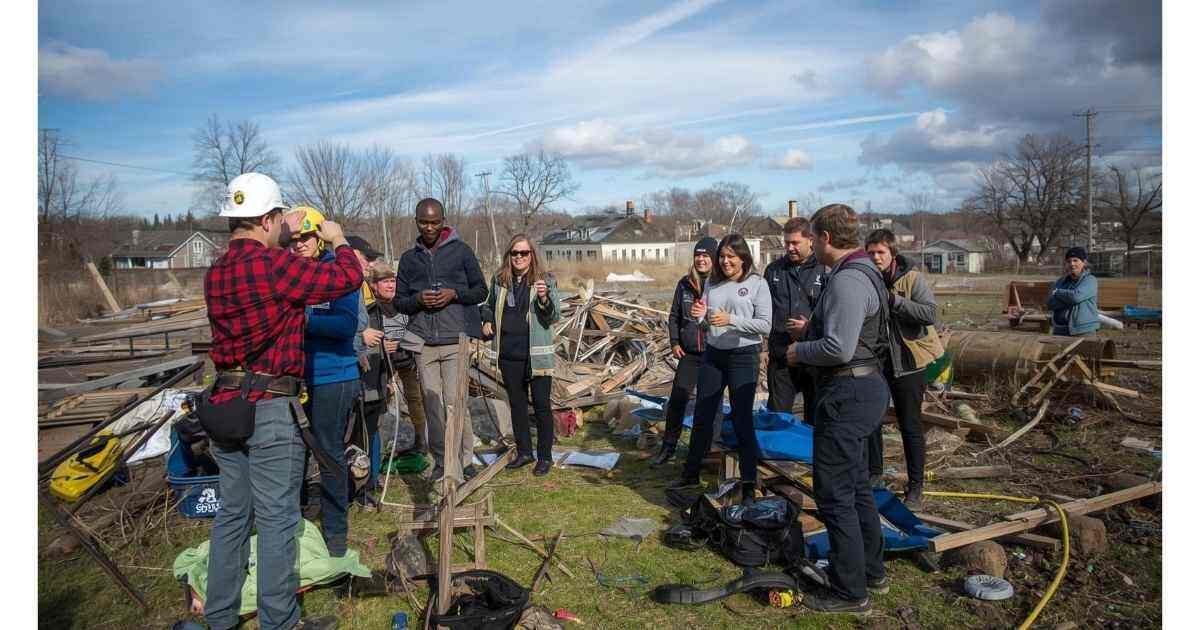
Every time disaster strikes — whether it’s a flood, earthquake, or wildfire — one group of people runs toward the danger while everyone else runs away: the disaster management crew. They’re the backbone of rescue and recovery efforts. But while the world praises their courage, few realize how much stronger these teams could be if they were truly empowered.
Empowerment isn’t just about better pay or new uniforms. It’s about giving these professionals and volunteers the skills, tools, authority, and emotional support they need to make quick, effective decisions that save lives. When the crew is empowered, the entire system becomes stronger, faster, and more humane. In this blog you will find ” how can we empower the disaster management crew”.
Understanding Empowerment in Disaster Management
To empower a disaster management crew means to strengthen their competence, confidence, and coordination.
This involves a mix of technical training, policy support, access to technology, and emotional resilience. It’s not a one-time effort — empowerment must evolve with the changing nature of disasters and the communities they affect.
In simple terms, an empowered disaster management team doesn’t just react — it anticipates, adapts, and leads.
The Key Barriers They Face
Despite their dedication, many crews still operate under serious limitations:
- Limited Training Opportunities:
Training often stops after initial certification. Without continuous learning, responders may struggle with newer challenges like chemical hazards or cyber-related emergencies. - Outdated Tools and Technology:
Many teams lack access to drones, digital mapping, and real-time communication tools that could make their work more precise. - Slow Decision Processes:
Bureaucratic layers delay life-saving actions. In a crisis, minutes matter — paperwork shouldn’t stand in the way. - Emotional and Physical Fatigue:
Long hours, trauma exposure, and limited rest can lead to burnout, which affects both performance and morale. - Poor Coordination Between Agencies:
When different organizations work independently, information gaps create confusion on the ground.
Recognizing these barriers is the first step toward creating empowered, efficient, and resilient teams.
1. Strengthening Skills Through Continuous Training
Disaster management is a dynamic field — what worked five years ago may not work today. Continuous, scenario-based training keeps teams ready for anything.
- Practical Simulations:
Realistic drills for floods, fires, earthquakes, and pandemics help responders act instinctively under stress. - Skill Expansion:
Training should cover emergency medicine, logistics, communication systems, and even mental health first aid. - Leadership Development:
Every crew member should learn to lead when needed. Empowerment grows when individuals feel capable of guiding others. - Cross-Agency Exercises:
Joint drills between fire, police, medical, and volunteer units improve coordination long before a real crisis hits.
An empowered responder is one who’s always learning — not one who stops after earning a certificate.
2. Leveraging Technology for Faster, Smarter Response
Technology can turn a slow, chaotic response into a fast, coordinated one. But it must be accessible and easy to use.
- AI-Based Risk Forecasting: Predicting floods, storms, or landslides days in advance allows teams to prepare resources early.
- Drones and Satellites: Aerial mapping helps locate victims or blocked routes without putting rescuers in danger.
- GIS and Data Dashboards: These tools visualize real-time conditions, helping allocate relief supplies more effectively.
- Offline Communication Apps: When networks collapse, radio-linked mobile apps can keep teams connected.
However, the real magic happens when humans and technology complement each other — not when one replaces the other.
3. Smarter Policies and Local Decision Power
Empowerment also means trust — trusting crews to make critical decisions on the ground without waiting for top-level approval.
- Decentralized Authority: Local command centers should be allowed to take immediate action during crises.
- Emergency Fund Access: Budgets for relief, fuel, and transport should be instantly available when a disaster hits.
- Clear Operational Protocols: Each member must know their role and reporting line to avoid confusion.
When responders have both autonomy and accountability, they can adapt to fast-changing conditions far better than a distant control room can.
4. Building Community Partnerships
Communities are not passive victims — they’re the first line of defense.
Empowering disaster management means including citizens in the process.
- Community Training Programs: Teach locals first aid, basic rescue, and safe evacuation methods.
- Volunteer Networks: Encourage youth groups, NGOs, and neighborhood associations to assist in logistics and communication.
- Early Warning Awareness: Educate the public about sirens, alert apps, and evacuation signals to reduce panic.
An empowered crew supported by an informed community becomes a powerful shield against chaos.
5. Prioritizing Mental and Physical Health
Behind every uniform is a human being who feels exhaustion, fear, and grief. Disaster work is mentally taxing, and ignoring that takes a heavy toll.
- Post-Operation Counseling: Regular therapy sessions should be part of every major mission’s follow-up.
- Rest and Rotation Schedules: Allowing crews to recover ensures long-term effectiveness.
- Fitness and Nutrition Support: Good health directly improves endurance and focus.
- Recognition Programs: Simple appreciation — awards, public thanks, or promotions — keeps morale alive.
Caring for responders is not optional; it’s essential. Their strength depends on how well they’re cared for — before, during, and after disasters.
6. Learning from Global Success Stories
Countries across the world have shown how empowerment can change outcomes:
- Japan’s “Disaster-Ready Society” model integrates public participation in drills, from schools to offices.
- The Philippines uses community-led disaster committees that act faster than top-down systems.
- India’s NDMA employs real-time satellite data for coordinated rescue planning.
- New Zealand’s Resilience Strategy emphasizes emotional preparedness and recovery-based empowerment.
These examples prove that when response systems combine local leadership, modern tools, and continuous learning, results are transformative.
7. Collaboration for a Stronger Future
Empowerment doesn’t happen in isolation. Governments, NGOs, private companies, and even universities must work together.
- Tech companies can provide data systems and apps.
- NGOs can handle training and post-disaster care.
- Academic institutions can research better disaster models and materials.
When all sectors unite, the disaster management ecosystem becomes faster, smarter, and more humane.
Conclusion
Empowering the disaster management crew is not just about reacting to tragedy — it’s about preparing for it. It means equipping them with the skills, tools, freedom, and mental resilience to lead in the toughest moments.
These teams are society’s front line when everything else fails. By investing in their empowerment, we’re not just saving lives — we’re building a future where recovery starts the moment disaster strikes.