









Introduction: Why This Matters
The Glasgow water main break Shettleston Road incident became a major local news topic in 2025 because it affected everyday life in Glasgow’s East End — disrupting water supply, transport, businesses, and community routines. Rather than being a simple utility issue, this break revealed vulnerabilities in aging city infrastructure and raised questions about preparedness, public communication, and long-term resilience.
This article gives you everything you need to know about this event:
- What happened and when
- Why it occurred
- Immediate and long-term impacts
- How authorities responded
- What residents should know
- What the future holds for Glasgow’s water network
It is written to be fully unique, highly informative, and SEO-friendly, providing comprehensive awareness and guidance for all readers.
1. What Happened on Shettleston Road? (Incident Overview)
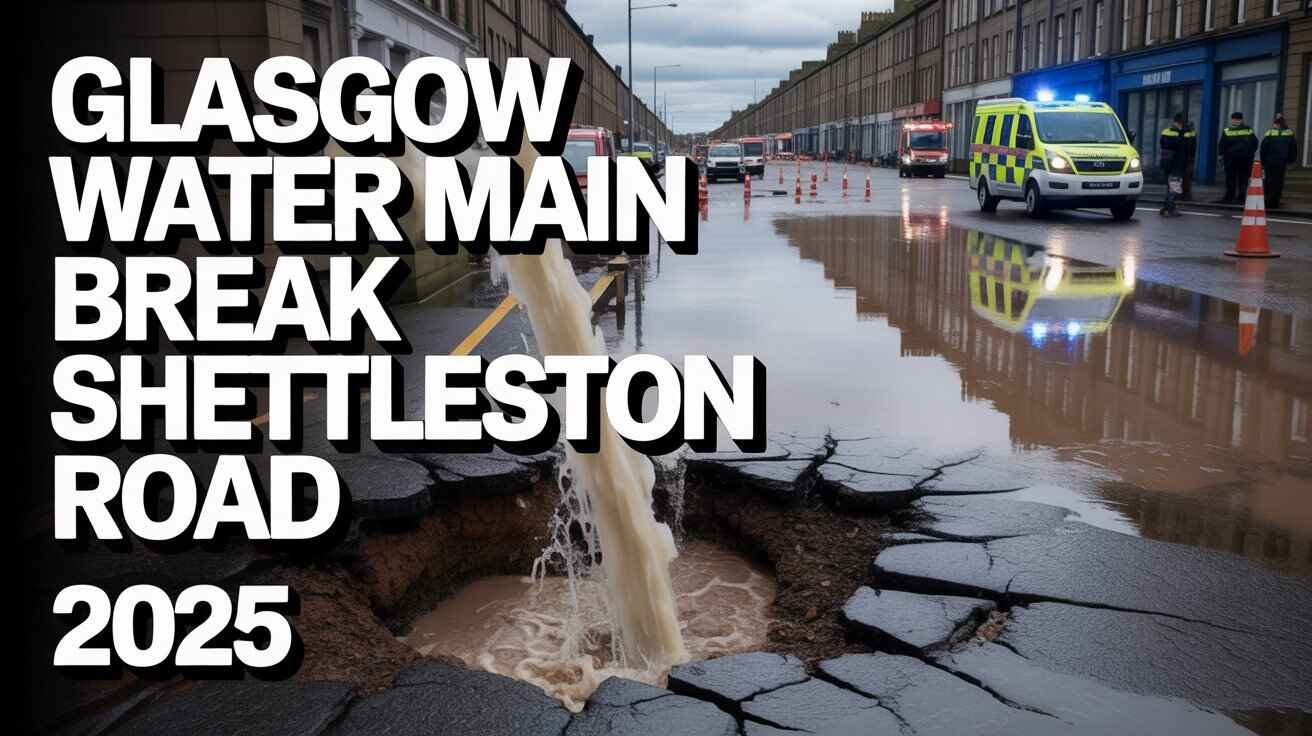
On May 29, 2025, an underground water main ruptured beneath Shettleston Road, one of Glasgow’s major transport and residential corridors. The break caused flooding, road closures, and disrupted water supply for hundreds of homes.
Immediate Consequences
- Massive flooding on road surfaces
- Loss of water supply to nearby residences
- Road closures and traffic diversions
- Public transport rerouting
- Discoloured water (brown or cloudy) reported in many homes
Residents reported taps running dry or delivering unsafe, discoloured water, indicating pressure imbalances in the water network.
2. Causes of Water Main Breaks in Glasgow
Water mains can fail for multiple reasons, often simultaneously:
A. Aging Infrastructure
Many underground mains in Glasgow are decades old. Over time, cast-iron and older pipes corrode and weaken, making them prone to rupture under stress.
B. Pressure Fluctuations
Sudden changes in water pressure from maintenance, high demand, or system adjustments can stress weak points in pipes, leading to breaks.
C. Soil and Weather Conditions
Glasgow’s clay-heavy soil, combined with wet winters and freezing cycles, can shift and move underground pipes, causing fractures.
D. Traffic Load and Vibrations
Shettleston Road is a heavily used route. Continuous vehicle traffic, especially heavy trucks, can vibrate the ground, accelerating pipe wear and fatigue.
3. Timeline of the Incident
| Time | Event |
|---|---|
| Early morning, May 29 | Initial rupture and flooding observed |
| Morning rush hour | Road closures and traffic diversions implemented |
| Mid-morning | Emergency isolation and repair planning begins |
| Afternoon | Repair teams excavate damaged pipe section |
| 12–48 hours after | Repairs completed and water supply gradually restored |
4. Traffic and Transport Disruption
Shettleston Road serves as a major connection for residents and commuters. A water main break caused:
- Temporary closure of key road sections
- Diversions for bus routes and private vehicles
- Increased congestion on surrounding streets
Traffic Diversions Table
| Route/Service | Temporary Change |
| Main bus services | Diverted via nearby streets |
| General traffic | Redirected to alternate arterial roads |
5. Water Supply Disruptions and Quality
Water main breaks cause:
- Loss of water supply
- Low water pressure
- Water discolouration from sediment and air entering pipes
Residents were advised to run cold taps for several minutes after service was restored to clear sediment from pipes.
6. Impact on Local Residents
Daily Disruption
Homes experienced interruptions in:
- Cooking
- Bathing
- Cleaning
- Toilet use
Vulnerable Groups
Elderly, children, and people with medical needs faced significant inconvenience due to water supply interruptions.
7. Economic Impact on Businesses
Businesses along Shettleston Road faced:
- Reduced customer foot traffic
- Operational halts for water-dependent services
- Short-term revenue loss
Local Business Impact Table
| Business Type | Primary Challenge | Estimated Impact |
| Cafés & Restaurants | Cannot operate without water | High |
| Laundromats | Service halted | Medium |
| Retail shops | Reduced customers | Medium |
| Service providers | Limited operations | Low to Medium |
8. Response by Authorities
Emergency response included:
- Isolating the damaged pipe
- Excavating and repairing the pipe section
- Installing safety barriers and traffic control measures
- Issuing public advisories
9. Repair and Recovery Process
Steps Taken
- Assess break location
- Shut off affected valves
- Excavate pipe section
- Repair or replace damaged pipe
- Test water flow
- Restore road surface and public access
Repair duration was approximately 12–48 hours, depending on damage severity.
10. Long-Term Infrastructure Issues
The Shettleston Road incident highlights Glasgow’s aging water network. Cast-iron and older pipes remain prone to failure, especially under changing climate conditions and high urban stress.
11. Preventive Measures
Infrastructure Upgrades
Replace old pipes with modern, durable materials to reduce break risk.
Smart Monitoring
Use sensors to detect pressure drops or leaks early, allowing preemptive action.
Community Reporting
Encourage residents to report unusual water flow or visible leaks promptly.
12. Community Response and Resilience
Residents supported each other by sharing resources, staying informed, and following official updates. Community cooperation helped mitigate some negative impacts.
13. Comparison Table: Causes vs Solutions
| Common Cause | Description | Long-Term Solution |
| Aging Pipes | Material fatigue | Systematic pipe replacement |
| Traffic Stress | Vibration and load | Traffic load management & road reinforcement |
| Temperature Changes | Expansion/contraction | Insulated, flexible piping systems |
| Ground Movement | Soil shifting | Stabilization and monitoring |
14. Frequently Asked Questions (FAQ)
Q1: What caused the Glasgow water main break?
A: Aging pipes, pressure fluctuations, soil movement, and traffic vibrations contributed to the rupture.
Q2: When did it happen?
A: Early morning on May 29, 2025.
Q3: How long did repairs take?
A: Approximately 12–48 hours depending on severity.
Q4: Was water contamination a risk?
A: Discolouration occurred due to sediment and air in the pipes; authorities advised precautions.
Q5: Were buses diverted?
A: Yes, several local bus services were rerouted to avoid the affected section.
Conclusion
The Glasgow water main break Shettleston Road was a significant event affecting residents, commuters, and businesses. It highlights the need for modern infrastructure, proactive monitoring, emergency preparedness, and effective community communication. By understanding the causes, impact, and solutions, Glasgow can improve resilience and minimize disruptions from future water main breaks.